






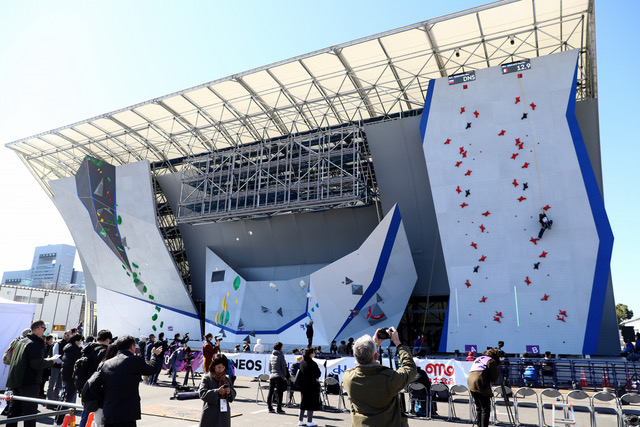
Climbing has always been about more than just reaching the top. It’s about strategy, strength, problem-solving, and even overcoming fear. When climbing first appeared on the Olympic stage in 2020, it was a dream come true for athletes and fans worldwide. But the way the event was structured left many scratching their heads. Fast forward to the Climbing Olympics 2024, and the changes have transformed the competition into something far more exciting. This is the story of how the sport climbing combined Olympics evolved, from a controversial debut to a celebrated highlight of the Games.
What Is Sport Climbing in the Olympics?
At its core, Olympic climbing is divided into three disciplines:
- Bouldering – Short, powerful routes climbed without ropes, focusing on problem-solving and explosive strength.
- Lead Climbing – Athletes climb as high as possible on a long wall within a set time, clipping into protection points with a rope.
- Speed Climbing – A head-to-head race on a standardised wall, where the fastest climber wins.
When the sport first entered the Olympics, the question was: how do you combine such different skills into one event? The answer at the time sparked a lot of debate.
The Tokyo 2020 Debut: A Controversial Start
The Tokyo 2020 Olympics marked the debut of sport climbing on the world’s biggest stage. The event was called the sport climbing combined Olympics. Instead of separating the three disciplines, athletes were required to compete in all of them.
- How it worked: Athletes’ rankings from speed, bouldering, and lead were multiplied together. The competitor with the lowest combined score won.
- The issue: Most climbers are specialists. Speed climbing in particular demands a very different style of training compared to bouldering and lead. Forcing all athletes to compete across all three meant that the best in one discipline often couldn’t show their true strength.
This format created some memorable moments, but also left both fans and athletes frustrated. It didn’t feel like a fair representation of the sport.
Athletes Who Shined Despite the Format
Even with the controversial structure, stars emerged. None more so than Janja Garnbret, the Slovenian climbing legend. Widely considered one of the best climbers in history, Garnbret dominated the combined event in Tokyo and took home the first-ever Olympic gold medal in climbing.
Her victory showed just how much determination, versatility, and skill were needed to win under the old format. But it also underlined the need for change, very few could master all three disciplines the way she did.

The Push for Change: Listening to Athletes
After Tokyo, the International Federation of Sport Climbing (IFSC) and the International Olympic Committee (IOC) took the feedback seriously. The message from athletes was clear: combining all three disciplines was unfair and unsustainable.
The solution? Split the events into separate categories for Paris 2024. This decision marked the true beginning of the evolution of the sport climbing combined Olympics.
Paris 2024: A Fresh Format
At the Climbing Olympics 2024 in Paris, the format finally gave specialists the chance to shine. Two separate medal events were introduced:
- Sport Climbing Combined Event – Bouldering + Lead combined.
- Speed Climbing – A standalone medal event.
This simple change made a massive difference. Bouldering and lead are similar in terms of technique and physical demands, so pairing them was a natural fit. Speed climbing, on the other hand, stands apart with its focus on raw power and explosive movement.
Comparison: Tokyo 2020 vs. Paris 2024
To see the difference clearly, here’s a quick breakdown:
| Olympics | Format | Disciplines Included | Medal Events | Main Reaction |
|---|---|---|---|---|
| Tokyo 2020 | One combined event | Speed + Bouldering + Lead | 1 set of medals | Criticism: too demanding, unfair to specialists |
| Paris 2024 | Split events | Combined (Bouldering + Lead) and Speed (solo) | 2 sets of medals | Praised: fairer, more exciting, clearer for fans |
This table makes it clear why the Paris changes were celebrated as a turning point for the sport.
Why the New Format Works Better
The Paris system fixed many of the earlier problems.
- Fairer competition: Specialists can now focus on their strengths.
- More medals: Two medal events instead of one means more climbers get recognition.
- Better for fans: Viewers can clearly see the differences between the power of speed and the strategy of combined climbing.
The sport climbing combined Olympics now represent the sport far more accurately.
Highlights From the Paris 2024 Games
The Paris Games were full of excitement. In the sport climbing at the summer Olympics – combined schedule and results, the men’s event ended with a young British star, Toby Roberts, taking home gold. His consistency in both bouldering and lead earned him a total score of 155.2.
On the women’s side, the competition was fierce, with several athletes delivering incredible performances, carrying forward the legacy of Janja Garnbret.
Meanwhile, the sport climbing at the summer Olympics – combined medals tally brought new countries into the spotlight, proving that climbing is growing as a truly global sport.

The Indian Connection: Rising Interest in Climbing
One of the most exciting developments has been the growing interest in India. Searches for sport climbing combined Olympics Indian are on the rise, showing a surge in curiosity.
- Climbing gyms are opening in cities like Mumbai, Delhi, Bangalore, and Pune.
- Athletes like Tuhin Satarkar and Vatsala Maharaj are making waves nationally.
- Although no Indian climber has yet qualified for the Olympics, the Paris 2024 changes give hope for future representation.
For a country with a young, fitness-focused population, climbing could become the next breakout sport.
How to Become a Top Climber: Lessons From Olympians
Watching the Olympics often sparks a new generation of athletes. So what does it take to reach that level? Top climbers agree on a few essentials:
- Physical strength – Grip and finger power, strong core, and leg drive.
- Mental toughness – Staying calm under pressure and handling fear.
- Technique – Efficient footwork and body positioning.
- Strategy – Smart route reading and pacing.
- Recovery – Rest, sleep, and nutrition are just as important as training.
This balance of body, mind, and preparation is what makes the sport climbing combined Olympics so thrilling to watch.

Sport Climbing at the Summer Olympics – Combined Schedule
At Paris 2024, the sport climbing at the summer Olympics – combined schedule was carefully planned to build momentum. Fans were able to follow qualifying rounds, semi-finals, and finals across multiple days. This staggered schedule gave viewers time to understand the different stages and allowed climbers to recover between events.
Sport Climbing at the Summer Olympics – Combined Medals
With the addition of two medal events, the sport climbing at the summer Olympics – combined medals table became more diverse. Nations that previously had little chance of winning suddenly had an opportunity, especially in speed climbing. This increased representation is crucial for the sport’s global growth.
The Role of Janja Garnbret
Any discussion about Olympic climbing would be incomplete without highlighting Janja Garnbret. She remains the face of the sport and a role model for young athletes worldwide. Garnbret’s dominance in Tokyo and continued success in international competitions prove that climbing is not just a niche pursuit, it’s a world-class sport worthy of the Olympic stage.
Looking Ahead: The Future of Olympic Climbing
The success of Paris 2024 has opened the door for even more changes in the future. The IFSC and IOC are already considering how the sport might evolve for the upcoming Games. Possibilities include:
- More medals and categories, such as a separate bouldering or lead event.
- Greater athlete quotas, allowing more climbers to compete.
- Enhanced broadcasting with better graphics to explain scores and routes to fans.
As interest grows worldwide, the sport climbing Olympics is likely to become a staple of the Summer Games.
Final Thoughts: From Controversy to Celebration
The journey of the sport climbing combined Olympics is a story of growth and adaptation. From the controversial Tokyo format to the celebrated changes in Paris, the sport has found its rhythm. Athletes can now compete fairly, fans can enjoy a clearer spectacle, and nations across the world, including India, are embracing climbing like never before.
The Olympics have always been about pushing human limits, and climbing captures that spirit perfectly. Whether you’re watching speed climbers fly up the wall or lead specialists hang on by their fingertips, the climbing competitions remind us of what it means to rise, to fight, and to never give up.